
Cooking oils are a kitchen staple, used in frying, baking, sautéing, and dressing salads. But not all oils are created equal, especially when considering health, nutrition, and halal compliance. Some oils are heavily processed, chemically refined, or contain additives that may not be halal. Others are minimally processed, nutrient-rich, and align with Islamic principles of tayyib—wholesome, pure, and beneficial for health.
At Halal Edible, we explore the best halal cooking oils that support heart health, brain function, digestion, and ethical consumption, helping you make informed choices for everyday cooking.
What Makes an Oil Halal and Healthy?
When selecting cooking oils, consider both halal compliance and health benefits:
- Halal Compliance:
- Oil must be free from haram ingredients or animal-derived additives.
- Avoid oils processed with non-halal enzymes or alcohol-based flavorings.
- Look for halal certification from trusted authorities like JAKIM, IFANCA, or HFA.
- Health Considerations:
- Rich in healthy fats: Monounsaturated and polyunsaturated fats support heart and brain health.
- Minimal processing: Cold-pressed or unrefined oils retain antioxidants, vitamins, and natural flavor.
- Stable for cooking: Oils should resist oxidation during heat application.
- Tayyib (wholesome): Free from chemical solvents, hydrogenation, or excessive refining.
Tip: Halal oils are naturally permissible, but tayyib oils ensure nutritional value and ethical sourcing.
Top Halal Cooking Oils for Health
1. Extra Virgin Olive Oil (EVOO)
- Source: Cold-pressed from olives.
- Health Benefits:
- High in monounsaturated fats, promoting heart health.
- Rich in antioxidants and polyphenols, reducing inflammation.
- Supports brain function and cognitive health.
- Best Use:
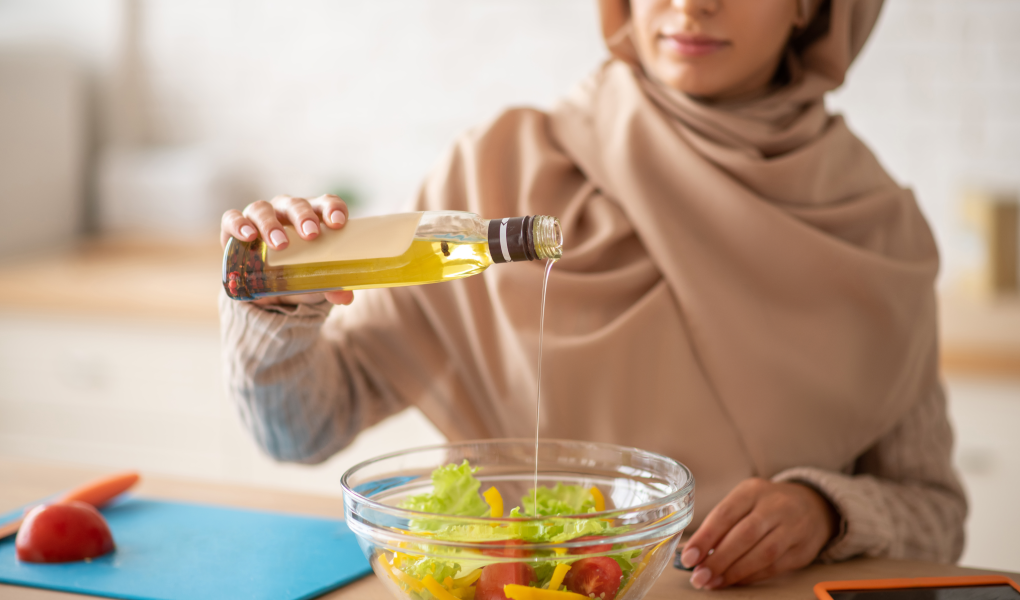
- Ideal for salad dressings, drizzling over cooked dishes, sautéing at moderate heat.
- Halal Consideration: Naturally plant-based and halal; look for certified EVOO for authenticity.
2. Coconut Oil
- Source: Extracted from the flesh of coconuts, often cold-pressed.
- Health Benefits:
- Contains medium-chain triglycerides (MCTs) for energy and metabolism.
- Supports heart and brain health, digestive wellness, and skin care.
- Stable at high heat, making it suitable for frying.
- Best Use:
- Frying, baking, and sautéing, or as a finishing oil for flavor.
- Halal Consideration: Pure coconut oil is naturally halal and tayyib.
3. Avocado Oil
- Source: Cold-pressed from ripe avocado fruit.
- Health Benefits:
- High in monounsaturated fats for heart health.
- Contains vitamin E and antioxidants for anti-inflammatory effects.
- High smoke point (~520°F / 270°C), perfect for high-heat cooking.
- Best Use:
- Stir-frying, roasting, and grilling.
- Halal Consideration: Plant-based and halal by nature; select certified brands for processing assurance.
4. Sesame Oil (Cold-Pressed)
- Source: Cold-pressed from sesame seeds.
- Health Benefits:
- Rich in antioxidants, lignans, and healthy fats.
- Anti-inflammatory and heart-protective properties.
- Supports digestion and skin health.
- Best Use:
- Drizzling over salads, stir-fries, or as a flavor enhancer in sauces.
- Halal Consideration: Ensure cold-pressed and additive-free for maximum tayyib quality.
5. Sunflower Oil (Unrefined or High-Oleic)
- Source: Extracted from sunflower seeds.
- Health Benefits:
- High in vitamin E, supporting antioxidant protection.
- High-oleic varieties offer heart-healthy monounsaturated fats.
- Best Use:
- Frying, sautéing, and light baking.
- Halal Consideration: Choose unrefined, additive-free, or certified halal versions, as conventional seed oils may be heavily processed.
6. Flaxseed Oil
- Source: Cold-pressed from flax seeds.
- Health Benefits:
- Rich in omega-3 fatty acids, supporting heart, brain, and joint health.
- Anti-inflammatory and nutrient-dense.
- Best Use:
- Cold use only, such as in salads, smoothies, or drizzled over cooked vegetables.
- Not suitable for frying due to low smoke point.
- Halal Consideration: Naturally plant-based and halal; select cold-pressed and additive-free options.
7. Almond Oil (Cold-Pressed)
- Source: Extracted from raw almonds.
- Health Benefits:
- Contains monounsaturated fats, vitamin E, and antioxidants.
- Supports heart health, skin, and hair.
- Best Use:
- Drizzling, salad dressings, baking, and light sautéing.
- Halal Consideration: Plant-derived and halal; choose cold-pressed and organic for tayyib quality.
Oils to Use Sparingly
While some oils are naturally healthy, others should be limited due to processing or nutritional concerns:
- Refined Seed Oils: Soy, corn, cottonseed oils may be heavily processed and high in omega-6 fatty acids, contributing to inflammation if overconsumed.
- Hydrogenated Oils: Contain trans fats, which are unhealthy even if halal-certified.
- Blended Margarine Oils: Often contain processed vegetable oils and additives; check certification carefully.
Tips for Using Halal Cooking Oils
- Know the Smoke Point: Use high-smoke-point oils (avocado, coconut) for frying, and delicate oils (olive, flaxseed) for low-heat cooking or dressings.
- Store Properly: Keep oils in cool, dark places to prevent oxidation and nutrient loss.
- Read Labels: Check for additives, flavorings, or emulsifiers that may not be halal.
- Opt for Organic and Cold-Pressed: Ensures minimal processing, better nutrient retention, and ethical production.
- Balance Fat Intake: Combine different oils to maintain a healthy balance of monounsaturated, polyunsaturated, and omega-3 fats.
Conclusion
Choosing the best halal cooking oils is not just about religious compliance; it’s about health, nutrition, and ethical consumption.
- Extra Virgin Olive Oil: Ideal for salads, low-heat cooking, and drizzling, rich in antioxidants and heart-healthy fats.
- Coconut Oil: High-heat stability and medium-chain triglycerides support metabolism and energy.
- Avocado Oil: High smoke point and monounsaturated fats make it perfect for frying and grilling.
- Sesame, Flaxseed, Almond Oils: Excellent for cold use, enhancing flavor, and providing nutrient density.
At Halal Edible, we recommend:
- Prioritizing minimally processed, halal-certified oils.
- Combining different oils to maximize health benefits.
- Using oils mindfully, balancing cooking needs with nutritional value.
- Choosing organic and cold-pressed options whenever possible to align with tayyib principles.
By selecting the right oils, you can enjoy wholesome, halal, and nutritious meals that support heart health, brain function, and overall well-being. Cooking with the best halal oils is not only a choice for your body—it’s a step toward mindful and ethical consumption.